
In the same way that happens with so many music traditions, we owe to look into Folk music to know and better understand how the music of a culture works. Romania is not an exception, and it truly shows its strong roots reflected in all its music. Be it lay or even religious, the music contains an interesting and unique balance of all its influences. Be it Byzantine music or even the more modern Turkish makam tradition. As well as every Romanian musician trying to make it its own.
It is tempting to easily say that Romanian traditional music is similar to that of other central and eastern European countries. However, caution should be exercised here. We can witness the same mistake all over the planet. But the same way, not all Arab countries have the same music styles, nor do all peoples of India practice the same music tradition. Not all Balkan countries have the same way of looking at music. For instance, Romanian musicians tend to have a preference for melodies as well as melodic instruments. Harmonic instruments and chord progressions are a thing of modern times. And even at this time in history, percussion instruments have not been an important part of their musical tradition. In many countries from Africa, percussion instruments would be king; that is the role and importance of melodic instruments in Romanian music. Now, that does not mean rhythm and groove are absent in Romanian music. But the sense of these two is so strongly conveyed by melodic instruments, we barely notice the lack of actual percussion instruments. Again, this does not mean we will not find percussion instruments in Romania. Violins, accordions, wind instruments, even double basses, and the almighty cimbalom or tambal. These are the preferred voices in Romanian music.
The main inspiration for my book “ROMANIAN MUSIC FOR GUITAR” comes from the Lăutari atradition. This is just a term taken by musicians in Romania. There is not one specific style for lăutari. Their bands, known as Taraf, can be found in different areas of the country, performing a variety of music styles from a given region. Originally, most lăutari were Roma people. These denominated "gypsies" arrived in Romania through a series of migrations which parted all the way from Northwestern India. However, nowadays tarafs are made of a mix from Romani and other ethnicities.
This article is not aimed at being an essay about Romanian music. In fact, our lesson here is to know that all the traditional musicians in this culture learnt throughout the oral tradition. That is, lots of listening and playing, and fewer words and explanations. So, respecting this vision, I do not want to waste any of your time reading texts. Let's get on with the real matter at hand. Playing music. In the following posts about Romanian music we will immerse into playing Romanian music on the guitar. Ready? Stay tuned to this blog. More coming up!
SOME ROMANIAN MUSIC ON GUITAR LISTENING…
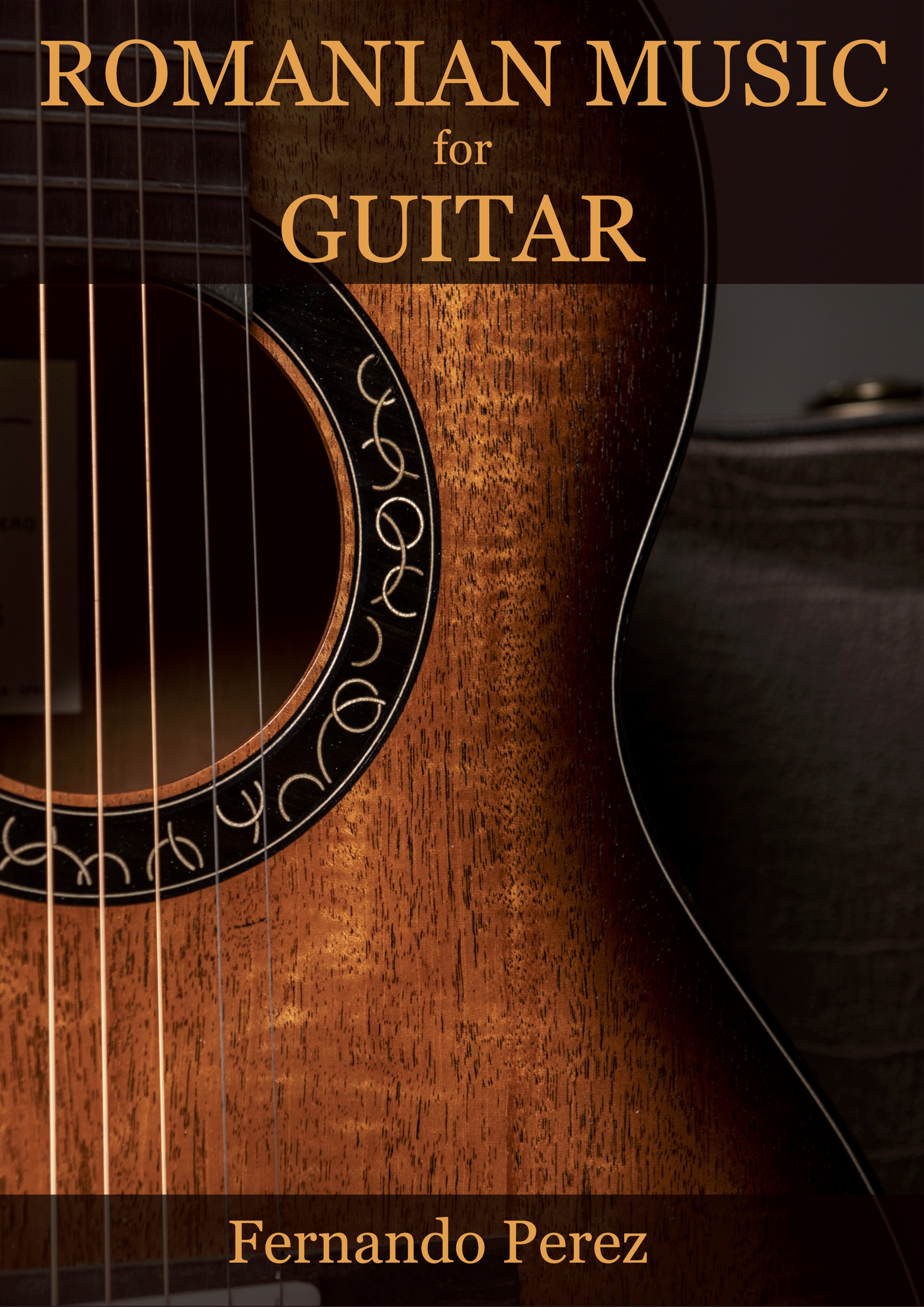
This article comes from the book “ROMANIAN MUSIC ON GUITAR by Fernando Perez”.